The Vacuum Chamber Enigma: Unlocking the Plasma Erosion Phenomenon
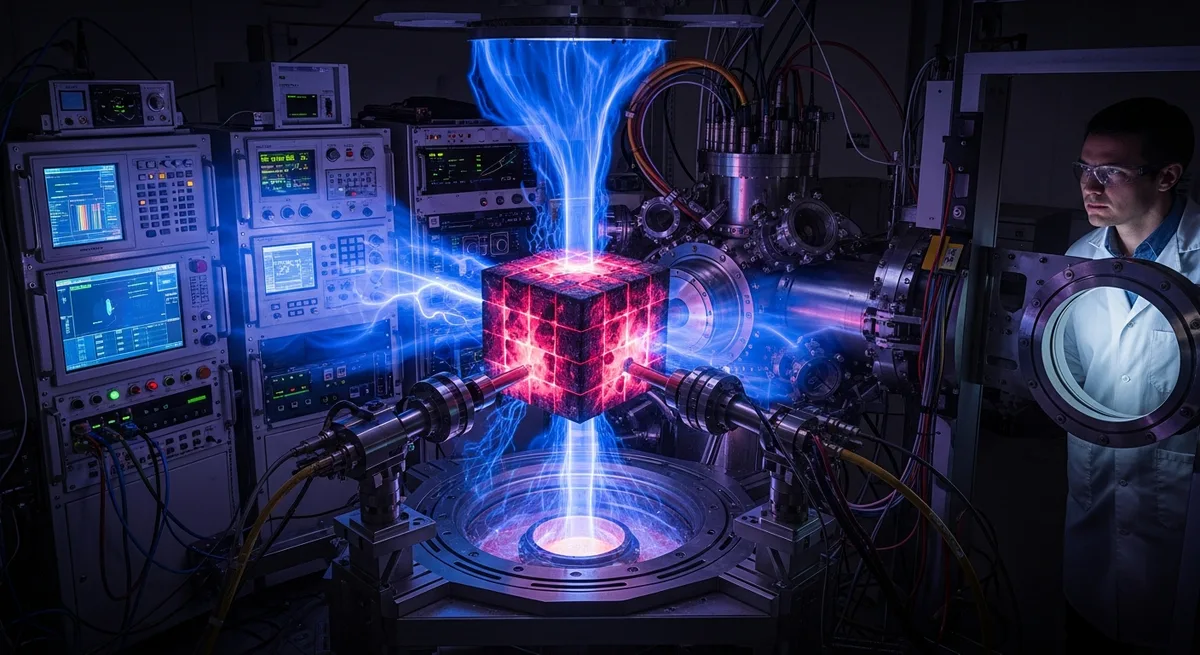
In the lightless heart of the vacuum chamber, where the SS304 steel walls endure a yield strength of 285 MPa, there emerges not merely illumination, but a profound and destructive phenomenon: plasma erosion. Though an alumina coating was intended to armor the surface, the 13.5-nanometer photon flux, in its volatile dance with residual oxygen molecules, carves microscopic craters that function as focal points for light scattering. Engineers have dubbed these "photon bombardment scars"—a structural trauma that forces the system into a perpetual, frantic recalibration of the laser trajectory, as even a 0.5-nanometer pit induces a wavefront distortion that no projection optics can hope to compensate.
The granite base, with its density of 2.75 g/cm³, confronts a dilemma that eluded the foresight of its architects: acoustic resonance. Despite the material’s negligible coefficient of thermal expansion, the ambient vibrations of the factory floor, propagating through the concrete foundation, excite 450 Hz oscillations within the granite monolith. This imperceptible tremor manifests as a stationary wave—an invisible, rigid obstacle that compels the wafer stage to execute constant micro-corrections, consuming 15 percent more electrical energy than the most optimistic theoretical models predicted.
The silicon carbide mirror, reflecting radiation via a 50-nanometer molybdenum-silicon matrix, suffers not only from thermal load but from a creeping material fatigue. After 4,000 hours of continuous operation, this molecular scaffold begins to surrender its atomic integrity, as 20-millijoule energy pulses induce localized deformation of the crystalline structure. This transformation, known as "layer diffusion," causes the reflection coefficient to plummet below the 65 percent threshold—a critical failure point after which the system must be dismantled, surrendered to the irreversible decay of its optical precision.
The collector mirror, tasked with concentrating radiation into a 10-micron point, encounters an unexpected electromagnetic interference: a secondary field generated by the plasma itself. As the CO2 laser, firing at a frequency of 50 kHz, transmutes tin droplets into an ionized stream, it births a localized magnetic field with a flux density reaching 0.8 Tesla. This field interacts with the metallic layers coating the mirror, inducing micro-currents that heat the optics far more aggressively than the direct photon emission, thereby compromising the semiconductor’s internal fabric.
The projection optics, operating within the constraints of a 0.33 numerical aperture, face an engineering paradox: wafer stage positioning errors born of static electrical discharge. Although a 10-nanometer titanium dioxide layer was meant to ensure pristine conditions, the high acceleration of the aluminum 6061 alloy stage triggers a triboelectric effect. This charge draws in the most infinitesimal solid particles, which, upon entering the 4:1 magnification zone, imprint "shadow defects" directly onto the silicon wafer, effectively sabotaging entire batches of microprocessors.
The feedback algorithms intended to govern plasma temperature suffer from a "data overflow" crisis, as system sensors record a torrent of 10^9 bits per second. This deluge of information induces a 2-millisecond latency in the processing circuits, meaning the laser reacts to a state of plasma that has already ceased to exist. This chronological schism between reality and digital control is the primary culprit behind why 20-nanometer structures occasionally emerge "blurred," despite the flawless geometry of the optical path.
The multilayer molybdenum-silicon filter, designed as a selective barrier, succumbs to chemical corrosion from residual hydrocarbon vapors that, despite a 10^-9 mbar vacuum, inevitably permeate the seals. Exposed to intense radiation, these vapors polymerize directly onto the optical surface, forming "carbon deposits" that absorb the 13.5-nanometer rays, transforming a precision instrument into an inefficient heat generator. This is molecular-level contamination—a blight that no chemical solvent can purge without shattering the delicate structural frame.
Ultimately, the system confronts its own physical finitude: the law of thermodynamic equilibrium. Every action performed at a 50 kHz frequency generates an excess of entropy that no cooling system can dissipate. The heat accumulating at the intermediate focal point triggers the ionization of stray molecules even within the vacuum, weaving a "plasma veil" that chokes the light flux. It is an engineering dead end: the system has attained such exquisite precision that it has become the primary obstacle to its own operation, where any further increase in energy only accelerates the disintegration of its components rather than refining the output.