The Convergence of Niobium and Titanium: The Crucible of Quantum Computing is strong, elegant,
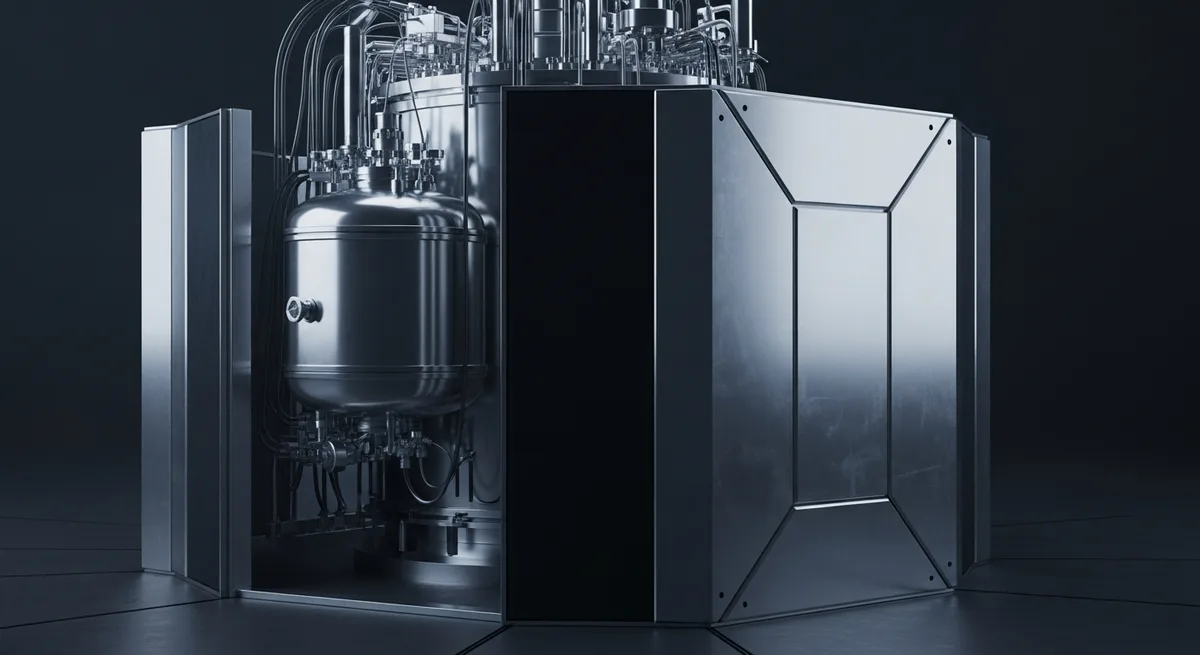
At the jagged periphery of the digital age, engineering transcends the constraints of macroscopic mechanics, where niobium-titanium alloys—possessing a critical temperature of 9.2 Kelvin—emerge as the primary conduits of information. As current density surges to 10^6 amperes per square centimeter, this metallic fabric liberates electron pairs from the stifling grip of thermal oscillation. This is no stochastic phenomenon, but a precisely orchestrated physical state where electrical resistance vanishes, facilitating the formation of quantum bits that function as probability nodes suspended in a state of superposition.
Each qubit is, by its very nature, inherently volatile; thus, its preservation relies upon an aluminum structural frame with a critical temperature of a mere 1.2 Kelvin. This metal forms a protective mantle capable of sustaining quantum coherence within a 10 to 100 microsecond interval. The paramount engineering challenge here is the mitigation of phonon scattering, for even the most infinitesimal vibrations within the crystalline lattice induce information leakage, collapsing a meticulously prepared computational state into chaotic noise.
Josephson junctions, serving as quantum gates, are engineered with a capacitance not exceeding 10^-15 farads, ensuring ultra-fast switching with negligible energy expenditure. These elements exhibit a resistance level of 10^-12 ohms, enabling logical operations with minimal thermal emission. Yet, the geometry of the junction itself, characterized by a nano-thick barrier structure, must maintain absolute symmetry; any microscopic irregularity triggers a phase shift that shatters the precision of the Hadamard transformation.
The cryogenic infrastructure, utilizing liquid helium-4, maintains a pressure of 1.2 bar, acting as a stabilizer to dampen ambient vibrations. This pressure, while only a marginal deviation above atmospheric norms, is essential to preserve the superconducting state, in which the material’s specific heat capacity becomes critically low. In this regime, the density of helium atoms ensures that no stray packet of energy can dislodge the qubits from their quantum equilibrium.
Magnetic shielding, implemented via mu-metal with a permeability coefficient of 10,000, forms 2-millimeter-thick walls around the processor core. This material suppresses external electromagnetic fields, the intensity of which—even in the most isolated laboratories—can reach the nanotesla range. Without this physical barrier, ambient noise would instantaneously suppress quantum processes, reducing the system to a mundane classical resistor where the retention of information would become impossible.
Error-correcting surface codes, constructed with a code distance of 5–7, continuously scan the internal matrix for anomalies arising from the fragility of quantum states. When the error threshold approaches the 10^-4 limit, algorithms automatically recalibrate qubit phases, eliminating spontaneous information decay. This demands immense computational overhead, which in turn generates additional thermal load, forcing cooling systems to operate at the very edge of their physical capacity.
Control electronics, utilizing arbitrary waveform generators, transmit microwave pulses with precision measured in picoseconds. These signals must be shaped so that their frequency aligns with the transition energy levels of the qubits, avoiding crosstalk in adjacent structures. Engineers face the persistent dilemma of thermal conductivity in cabling, which funnels heat directly into the cryogenic zone; consequently, every control lead must be forged from specialized alloys possessing an exceptionally low thermal conductivity coefficient.
The measurement process, executed via superconducting quantum interference devices (SQUIDs), freezes the wave function into a classically observable result. This moment, reminiscent of a lightning discharge, requires an instantaneous signal amplification during which the system remains hypersensitive to any inaccuracy. The interferometer’s ability to maintain coherence during measurement is the decisive factor in determining whether the retrieved data is reliable or merely the random noise of internal apparatus interaction.
The evolution toward quantum computing shifts the architecture from linear to exponential, enabling the application of Grover’s search with O(√N) time complexity. This is not merely an increase in speed, but a fundamental transformation in the mode of information processing, where databases are not "read" but "experienced" through the interference of probabilities. Such a system transcends traditional computational barriers, resolving problems that would require the lifespan of the universe for classical processors to solve.
Shor’s algorithm rewrites the rules of cybersecurity, demonstrating how quantum parallelism can factorize large prime numbers in a fraction of the time. The reliability of RSA encryption, predicated on the computational limitations of classical systems, becomes vulnerable to this new power. This compels engineers to develop novel, quantum-resistant encryption methods that rely not on mathematical complexity, but on the physical laws of information transmission.
The molecular framework used for material modeling allows for the precise calculation of electron orbital overlaps, eliminating guesswork from the design of chemical reactions. The quantum computer simulates atomic interactions at the nanoscale, opening the door to the synthesis of superconducting materials capable of operating at room temperature. This is not merely a theoretical possibility, but a practical objective, seeking to bridge the precision of quantum processes with the physical conditions of the everyday environment.
The transformation of artificial intelligence through k-means clustering algorithms allows for the processing of data arrays whose analysis would stall at the bandwidth limit in classical systems. This symbiosis between the laws of physics and machine learning replaces statistical modeling with a deep simulation of physical processes. The result is an aptitude for finding solutions where classical logic perceives only a chaotic, disconnected stream of data.
Logistics and financial optimization via quantum annealing seek the global minimum on a complex energy landscape, where quantum tunneling through local barriers becomes the primary tool. This is not merely a computational task; it is the discovery of a system state where all variable interactions are balanced. Each solution found in this manner reflects the physical equilibrium of the system, rather than a mere mathematical approximation.
Despite this potential, quantum structures remain imprisoned by physical constraints, where information leakage via phonon scattering remains inevitable even at 4.2 Kelvin. The engineering paradox intensifies: as the number of qubits increases, the system’s sensitivity to ambient noise grows not linearly, but exponentially. This implies that every new node becomes a potential point of failure, necessitating increasingly complex isolation methods and even more precise control electronics.
Currently, the fidelity of quantum gates founders upon the inevitable interaction between control signals and qubits, where a 10^-12 ohm resistance deviation triggers a cascade of errors. This is a fundamental engineering bottleneck that cannot be overcome by cooling the processor alone. Until new material fabrics are discovered that possess a lower sensitivity to thermal fluctuations, the system will remain trapped between immense computational power and a physical fragility that precludes the attainment of absolute logical stability.