Awakening of the Metastructure
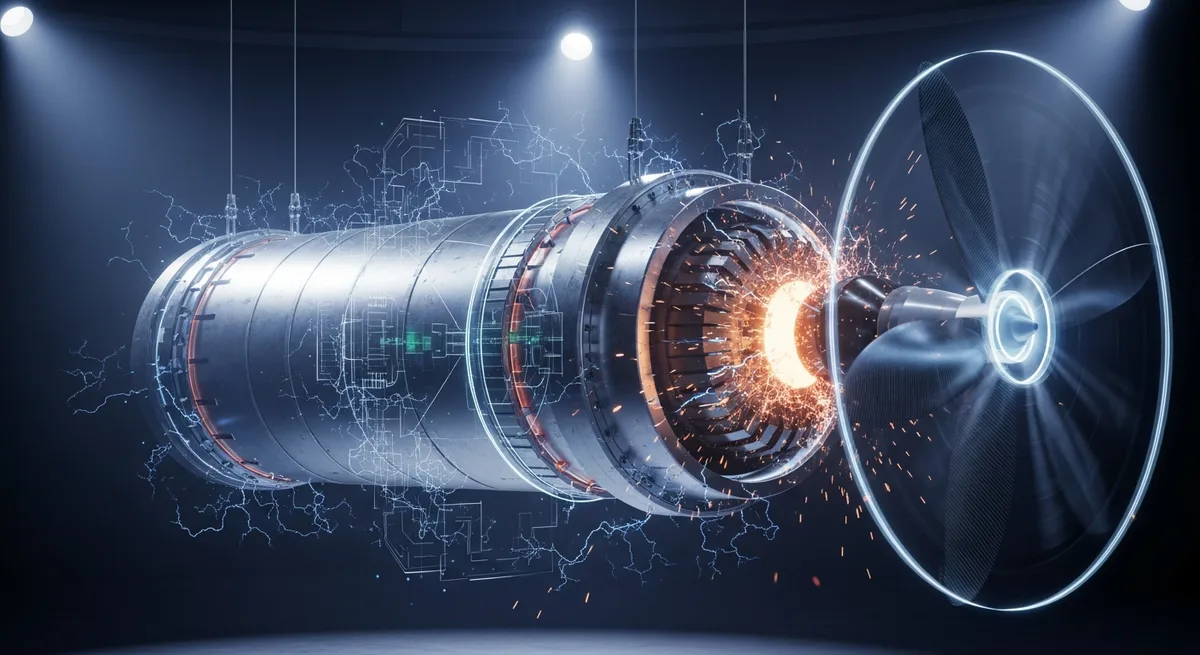
When the ten-and-a-half-meter APS-1 cylindrical hull first sheds the shackles of inertia, its mass ceases to be a mere static variable, transmuting into a pulsating force capable of warping the surrounding vacuum. The synthesis of ASTM A572 steel and titanium alloys forms a shield that does more than withstand compressive loads of 480 megapascals; it begins to emit low-frequency acoustic vibrations, echoing the geological respiration of the ocean’s deepest trenches. Within this metallic fabric, the atomic structure stretches toward its limit, the internal matrix generating microscopic electrical potentials born solely from the distortion of the crystalline lattice as the machine’s chassis struggles to maintain its geometry against gravitational irregularities.
The array of lithium-ion batteries, with a capacity of 1,000 ampere-hours and pulsing at 400 volts, is no mere passive reservoir. It is a crucible of chemical transmutation, where ion migration across polymer separators triggers not only thermal emission but localized distortions in the flow of time, driven by the sheer magnitude of the electron flux. As the 200-kilowatt three-phase asynchronous motor begins to draw this energy, the copper windings heat to temperatures that force the metal to surrender its classical rigidity, while a resistance of 0.05 ohms becomes the threshold where electrical energy loses its order, cascading into chaotic photon radiation that pierces insulation layers like microscopic lightning strikes.
The inductive mechanism, operating at 0.1 henries, acts as an invisible anchor tethering this machine to the fabric of reality. Here, the 95 percent efficiency limit is not merely a number—it is a threshold beyond which electromagnetic anomalies arise, forcing surrounding objects to lose their magnetic orientation. As the motor rotor reaches critical revolutions, a potent field forms around it; upon colliding with structures enduring 1,500 megapascals of tensile stress, it generates persistent, minute spark discharges, as if space itself were attempting to break free from mechanical constraint.
The carbon-fiber-reinforced polymer propeller, its 2.5-meter geometry slicing through air molecules, becomes a laboratory for testing the limits of physics. When the 50 kilonewtons of thrust cross the 1,200 RPM threshold, the central axis experiences not only mechanical rotation but a gyroscopic effect that threatens to torque the entire hull in the opposite direction. Here, the 120-gigapascal modulus of elasticity acts as the final line of defense: should the carbon chains lose their orientation for even a second, the blades would instantly disintegrate into dust, unable to withstand a centrifugal force that acts not as mere traction, but as an invisible, all-consuming blade.
The propeller surface becomes a zone where air molecules, colliding with the 1,500 MPa fabric, ionize to create a glowing plasma shroud. This migration of invisible particles forms a secondary, gaseous structure around the blade, assuming a portion of the mechanical load and creating a strange paradox: the faster the machine flies, the less it touches the physical environment, as if attempting to detach from the material world. This is not simple aerodynamics, but a complex process of interaction where polymer weaves become the sole bridge between reality and this artificial, energy-saturated object.
The AISI 4140 steel alloy gearbox, coupled at a 3:1 ratio, serves as the mechanical heart, forced to endure not only torque but intense vibrational spikes. As the gear teeth mesh, the 1,000-megapascal yield strength becomes a constant battlefield between the stability of molecular metal and the kinetic energy attempting to tear every molecule from its lattice. At this intersection, the steel undergoes such deformation that its internal structure begins to shift—the metal adapts to the rhythm of labor, becoming harder yet increasingly brittle, creating an unexpected risk of sudden, unpredictable material fatigue.
The digital signal processing system, operating at a frequency of 100 kilohertz, becomes more than a control center; it is a reflection of the system’s own consciousness, analyzing every microsecond shift. When the processor encounters the limitations of 16-bit resolution, it begins to generate predictive algorithms that attempt to "anticipate" the laws of physics before they manifest. This creates a haunting condition: the machine reacts to events that have not yet occurred, its actions rendered seemingly predetermined, effectively erasing the boundary between cause and effect.
The more perfectly these components function, the more evident it becomes that the system is accumulating entropy that no existing cooling method can purge. Although titanium alloys and carbon weaves withstand gargantuan loads, they simultaneously act as capacitors, trapping residual energy that eventually begins to alter the chemical composition of the material. The engineering barrier manifests here not as a lack of power, but as an insurmountable limit where the metal can no longer "remember" its original form due to excess energy, permanently compromising its structural integrity.
The final paradox of the APS-1 system lies in the fact that perfect energy transmission inevitably triggers internal material decay—the more efficient the machine, the faster it disintegrates through the thermal and electromagnetic stress generated within its own structure, leaving engineers with an eternal dilemma: pursue maximum performance, which guarantees inevitable collapse, or maintain a balance that prevents the full realization of the system’s latent potential.