Alloy Rhythm: Engineering Harmony
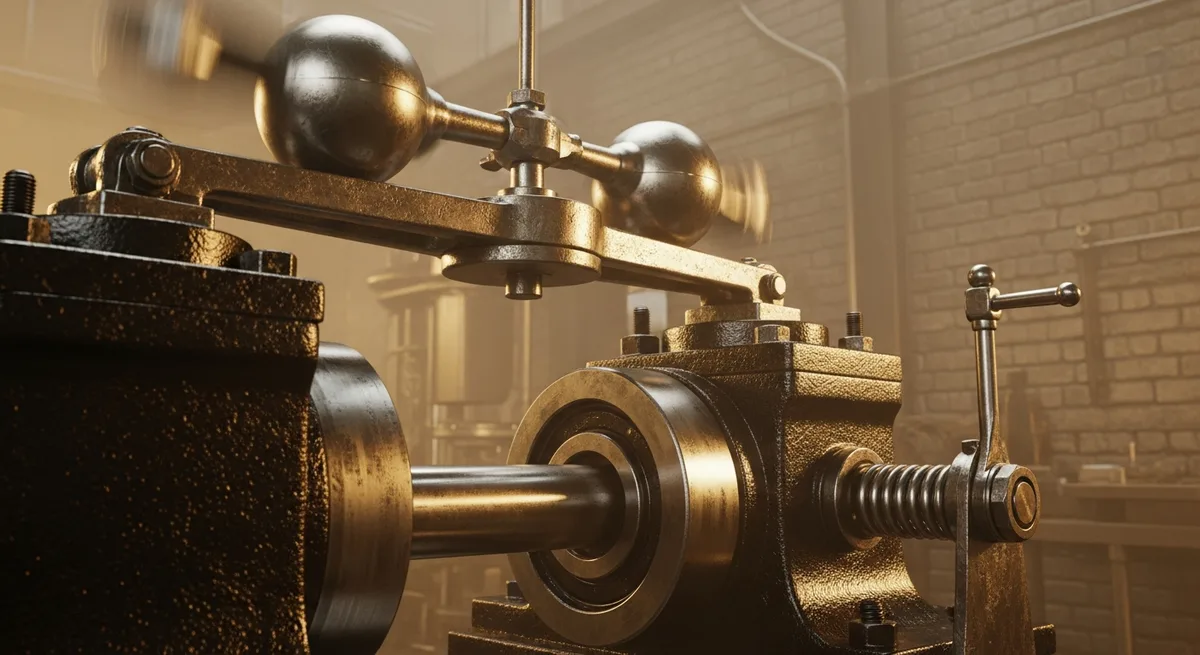
In 1788, as the dawn of industry began to dissipate the fog clinging to the outskirts of London, James Watt’s workshop hung heavy with the acrid, visceral scent of heated lubricant and scorched coal dust. The engineers tasked with monitoring the rhythmic pulse of the steam engines understood that their creations were far more than inert metal; they were captive surrogates for lightning, perpetually straining against the confines of their iron cages. The primary cast-iron housing, forged from an alloy containing 3.5 percent carbon, served as the initial bulwark against this elemental volatility. Its walls, possessing a density of 7.9 g/cm³, withstood a compressive stress of 250 MPa generated by the unbridled expansion of steam within the cylinders. Every atomic bond within this frame was configured to dampen vibrations, echoing the grinding of tectonic plates shifting deep beneath the Earth’s crust. This was no mere block of iron, but an engineering shield whose molecular fabric acted as a dissipative membrane, preventing the machine from disintegrating under the relentless mechanical pressure.
Rising above this massive foundation were two lead-tin alloy spheres which, upon reaching a velocity of 150 revolutions per minute, transformed into entities akin to celestial bodies. Their density of 10.4 g/cm³ endowed them with a mass of 0.25 kilograms, allowing for the accumulation of immense kinetic energy, restrained only by the unforgiving laws of inertia. As the system accelerated, these spherical objects, subjected to a centrifugal force of 12.1 Newtons, sliced through the air with a friction coefficient of 0.15, rising like taut, straining muscle. Their movement was a mathematically precise process, where every millimeter of ascent encoded information regarding impending steam overpressure. It was the embodiment of physics, a soul residing in the capacity to function as self-regulating memory, ruthlessly suppressing any fluctuation in velocity to prevent the machine from entering a state of destructive resonance.
The spine of the system was a shaft 2.5 centimeters in diameter and 30.5 centimeters in length, forged from steel with 1.2 percent carbon impurities. This rod, with a density of 7.8 g/cm³, endured a tensile force of 500 MPa, acting as a bridge between the chaotic expansion of steam and the orderly execution of mechanical work. When an angular velocity of 15.7 rad/s forced this element into rotation, it generated a tension accompanied by a deep, low-frequency hum that rippled through the factory floor like the aftershock of an earthquake. This shaft, tempered like an ancient blade, never yielded to the impact of its adversary, ensuring that torque was transmitted without the slightest deviation. The essence of its existence was an immutable connection between the flow of unbridled energy and a rigid geometric order, precluding any external force from distorting its established trajectory.
Interposed between the rotating components, bearings 1.3 centimeters in diameter, crafted from phosphor bronze with a density of 8.8 g/cm³, performed the role of silent sentinels. Soaked in a mixture of tallow and linseed oil, these elements prevented the metals from welding together under the heat that threatened to fuse the entire mechanism into a single mass of alloy. The lubricant, with a viscosity of 0.02 Pa·s, formed a protective liquid tissue that maintained a stable friction coefficient of 0.05 even as temperatures climbed. This was an ancient chemistry, where fats and botanical extracts converged to shield precious metal from premature death. Each bearing carried within it the history of thousands of revolutions, leaving invisible traces upon the bronze structure—a reminder that even the most perfect engineering possesses physical limits and an inevitable cost of attrition.
The will of the system was dictated by springs fashioned from the same 500 MPa-rated steel, their 0.5-centimeter diameter and 10.2-centimeter length storing potential energy. These were not mere metallic spirals, but a mechanical respiration, dictating the rhythm of the entire factory through constant tension and release. Each compression of the spring served as physical proof of the system’s vitality; like the string of a drawn bow, its invisible vibration governed the throttle valve with every stroke of the engine. The valve control lever, a mere 1.3 centimeters in length, became the locus where physical calculations transmuted into tangible work. The precision of its construction allowed the slightest displacement, calculated by the formula x = (Fc r) / (k ω), to instantaneously alter the factory’s output, ensuring the machine operated according to a rigid, pre-programmed algorithm.
This entire construction relied upon the principle of centrifugal force, which Watt masterfully adapted to create a closed loop where every formula possessed a physical equivalent in metal. The engineering challenge remained constant: how to govern a force that seeks its own destruction, making the introduction of feedback via spherical weights the definitive answer to a destructive cycle. While engineers drew inspiration from atmospheric engines, this regulator stood apart for its biomimetic approach, transposing observations of nature into the rigid world of metal. Looking back at this 1788 mechanism, it is clear that its operation was constrained not only by the resilience of materials but by the laws of friction. The ultimate paradox remains that the device created to ensure stability was itself in a state of perpetual motion, a movement that inevitably led to its own physical degradation, until the internal matrix lost its original integrity and metal fatigue became the only inescapable conclusion.