Metallic Heart of the Differential Analyzer
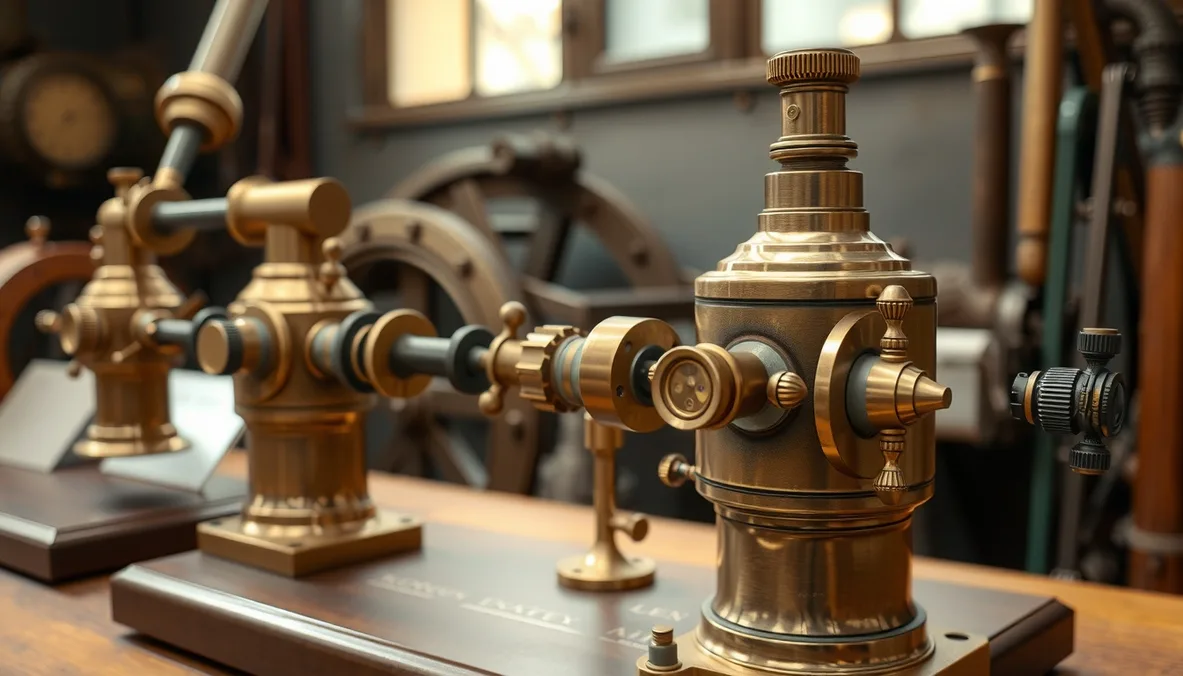
The year 1931 at the Massachusetts Institute of Technology arrived heavy with an atmosphere saturated by oil and metallic dust, a space where, amidst massive oak tables and the low, rhythmic thrum of motors, Vannevar Bush’s engineers were not merely constructing a calculating device, but a mechanical titan whose arteries pulsed not with electrical current, but with precisely calibrated torque. This differential analyzer rested upon a rigid, 1,360-kilogram steel chassis, where 152-millimeter-high AISI 1020 profiles absorbed ambient vibrations with stoic resolve, and every bolt, tightened to an unforgiving degree of precision, worked in concert with a 200 GPa modulus of elasticity to ensure that no external force could distort the complex equations as they transmuted into physical motion.
At the heart of the integrator disc lay AISI 52100 steel, hardened to 62 HRC—a material engineered to withstand 1.5 GPa of pressure, a force akin to the collision of tectonic plates concentrated into a microscopic point of contact. The surface, polished to a roughness of 0.05 micrometers, shimmered like a mirror, reflecting the engineers' profound anxiety regarding every micron of deviation; this disc was the machine’s conscience, required to remain flawlessly planar, for the slightest scratch would have ruthlessly dismantled the entire mathematical architecture.
The heat generated by the rotating components became a constant companion in the laboratory, as the AISI 440C steel balls, subjected to 12–15 newtons of force while biting into the discs, converted friction into an energy that demanded sophisticated thermodynamic management. Each ball, like a living organism, required a constant mist of lubricant to prevent it from seizing within its housing, while the phosphor-bronze bearings were designed to endure 3,000 hours of operation with a wear tolerance of a mere 0.003 millimeters, embodying a triumph of materials science over the inevitability of entropy.
Deep within the machine’s interior lurked 42 shafts, interconnected by 8620 steel gears whose 14.5-degree pressure angle guaranteed a fluid, almost silent motion, functioning as a nervous system that transmitted impulses from one node to the next. Each tooth was fashioned with a 0.08-millimeter clearance, allowing the metal to expand under thermal load; thus, the entire mechanism breathed like a sentient creature, reacting to every subtle fluctuation in the laboratory’s temperature.
The three-stage mechanical monster—a torque amplifier—performed an incredible feat, transmuting a mere 0.001 newton-meter input signal into 10 newton-meters of force, a surge akin to a lightning strike, yet governed by shellac-impregnated cotton belts. These belts, wrapped around cast-iron drums, acted as the machine’s musculature; when the input torque exceeded its threshold, the friction discs would begin to slip, emitting a low, groaning sound—the precise moment where mathematics surrendered to physical power, and metal transformed into will.
The entire structure was anchored on neoprene pads, isolating the apparatus from floor vibrations, for a 10-hertz oscillation could have compromised the integrity of the entire calculation. Bush understood that to master differential equations, one had to master the very world upon which the machine stood. Each bearing was tuned so that the 1.5-horsepower motor could guide the system through complex computations with grace, even as 60 percent of that energy dissipated as heat, as if the machine were sweating under the weight of its own labor.
The operator, manipulating the stylus on the input table, could feel this mechanical resistance; as it traced across the surface of modeling clay or plaster, the machine was not merely calculating, but physically modeling reality itself. Each movement of the stylus, transmitted through levers and differentials, forced the output shaft to rotate with a precision that would have been the envy of the finest horologists of the era, creating a symbiosis of manual intuition and cold steel.
This machine became a monument to the effort to comprehend a world not yet encoded in silicon microchips. Bush’s team had created a system operating on the same principles as the ossicles of the human ear—transmitting and amplifying signals with minimal loss. Every component possessed a soul: from the phosphor-bronze that absorbed the debris of friction, to the cast-iron frame that held this entire construction in a state of equilibrium.
The "Model II," appearing in 1935, became a true engineering marvel. Although 45 such devices were built over the following decade, only three remain today, standing in museums as silent reminders of an era when calculation demanded not only intellect but physical fortitude. It was a time when engineers felt the music of the metal with their fingertips, heard the song of the gears, and understood that true computational accuracy begins with how firmly the machine’s feet are planted upon the earth.
Every component of this machine, every 0.025-millimeter gap in the gears, was designed with eternity in mind, for the Bush differential analyzer was built not for speed, but for truth. Though the electronic tubes of the ENIAC would eventually supersede these mechanical giants, they could never replicate the visceral experience of watching an answer to a question that once required weeks of human labor emerge in real-time, born from the friction and heat of turning metal.