Cylinder Choreography: The Dance of Pistons and Flames
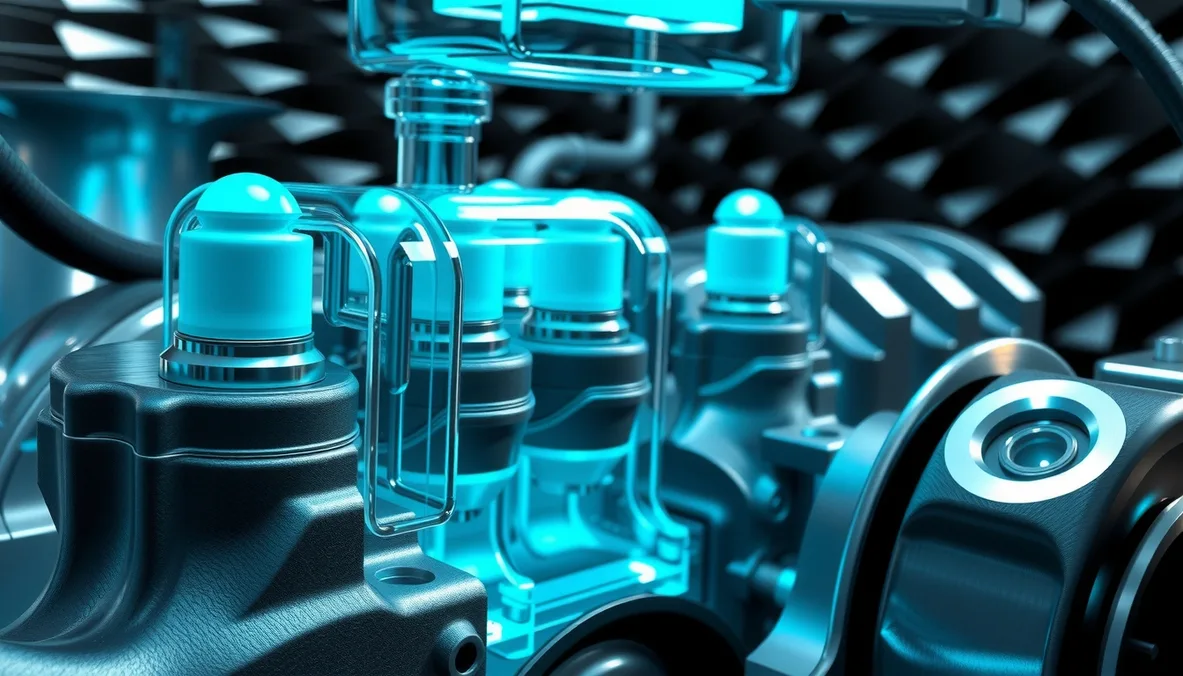
To gaze upon this engineering artifact, whose lineage traces back to 1968, is to witness more than a two-liter, four-cylinder internal combustion engine; it is a frozen manifesto of kinetic energy, where metal, lubricant, and spark coalesce into a singular, visceral symphony. Here, 89-millimeter pistons carve through cylinder walls in a choreography that transcends the mundane limits of mechanics. As each piston reaches top dead center and the combustion chamber is pressurized to 70 bar, physical reality assumes the scale of a tectonic shift, reminiscent of lightning captured within a cage of steel.
The engine block, cast from gray iron with 3.5 percent carbon inclusions, serves as the structural spine. Its 300 MPa pressure threshold allows it to endure gargantuan loads, yet the true essence of this component lies in its capacity for vibration dampening. Oscillations reaching frequencies of 8 kHz—which would otherwise inevitably dismantle the mechanism—dissolve here into the graphite lattices. This transforms the block into a silent sentinel, whose thermal mass and 50 W/m·K thermal conductivity prevent the formation of localized hot spots, wrapping the elemental fire in the stoic permanence of stone.
Rising from this robust foundation is the cylinder head—a miracle of A356-T6 alloy designed to dissipate heat that threatens to liquefy everything in its proximity. As combustion chamber temperatures spike, the head functions as a heat sink, shunting thermal energy into 120 liters per minute of circulating coolant. Its T6 tempering grants it a 280 MPa yield strength, essential for surviving the 70-bar concussive force repeated thousands of times per minute, thereby achieving a delicate equilibrium between lightness and indomitable force.
The heartbeat of the engine is dictated by a crankshaft forged from 4340-grade steel, where a 620 MPa fatigue resistance marks the razor-thin boundary between stability and catastrophe. At 5,500 revolutions per minute, the 200 Nm of torque generates shear forces that would twist any lesser metal into ruin. Yet, this shaft does more than transmit power; it absorbs the violent impulses of combustion, transmuting chaotic expansion into linear, rhythmic motion—a mechanical nervous system binding raw force to precise direction.
The pistons, crafted from a hypereutectic aluminum-silicon alloy, represent the pinnacle of thermal resilience. Silicon crystals embedded in their surface prevent the metal from seizing against the cylinder walls, even as temperatures climb to 350°C. This is a threshold zone where metal approaches plasticity, yet must maintain dimensional accuracy within 0.05 millimeters. Consequently, the piston’s motion assumes a near-metaphysical quality; enduring thousands of cycles every second, it remains steadfastly loyal to the laws of geometry throughout its operational life.
The valves—specifically the exhaust components forged from Inconel 751—are true martyrs, existing in an 800°C inferno where their metallic structure constantly strains to deform. They endure, preserving a 700 MPa strength where ordinary steel would collapse like putty. Their opening and closing, governed by overhead camshafts, mimic a respiratory cycle; 280-degree duration phases clear the path for air and fuel, crafting a perfect combustible mixture—a triumph of absolute precision.
The entire process, from the intake stroke—where the piston draws in an air-fuel mixture at a 14.7:1 ratio—to the power stroke, is a masterpiece of thermodynamics. Upon the spark, the flame front propagates at 25 meters per second. This is not a mere explosion, but a controlled liberation of energy, where thermal potential is converted into mechanical work. An efficiency reaching 35 percent stands as the apex of this mechanical evolution, embodying the harmony between a closed cycle and open power.
Looking toward the horizon, this engine will not become a relic of the past, but a point of departure for evolution, where 3D-printed cooling channels in cylinder heads will trace the contours of combustion chambers with millimeter accuracy. Ammonia and hydrogen blends will supplant gasoline, with hydrogen radicals accelerating the slow combustion of ammonia, ushering in an age of symbiosis where the internal combustion engine functions not as a source of pollution, but as a converter of clean energy.
Decades from now, these engines will become an invisible component of the planetary ecosystem, where every watt of energy is harvested in harmony with natural cycles. We will transition to 20:1 compression ratios and utilize magnetostrictive generators to convert vibrations directly into electricity. These will no longer be mere machines, but instruments of kinetic and chemical synthesis, capable of operating even on Mars, where methane derived from the Sabatier reaction will fuel our exploration.
This 1968 BMW M10 engine is the genetic code from which future energy systems will evolve; its engineering simplicity masks a profound truth about the human capacity to harness fire and compel it to serve progress. We are still learning to maximize every molecule and every joule. Thus, this journey, which began with primitive pistons, will lead us to a realm where mechanics merge with quantum physics, and the engine becomes a living, breathing, and perfectly balanced organ of our civilization.