Bronze Testament: A Chronicle of Time and Space
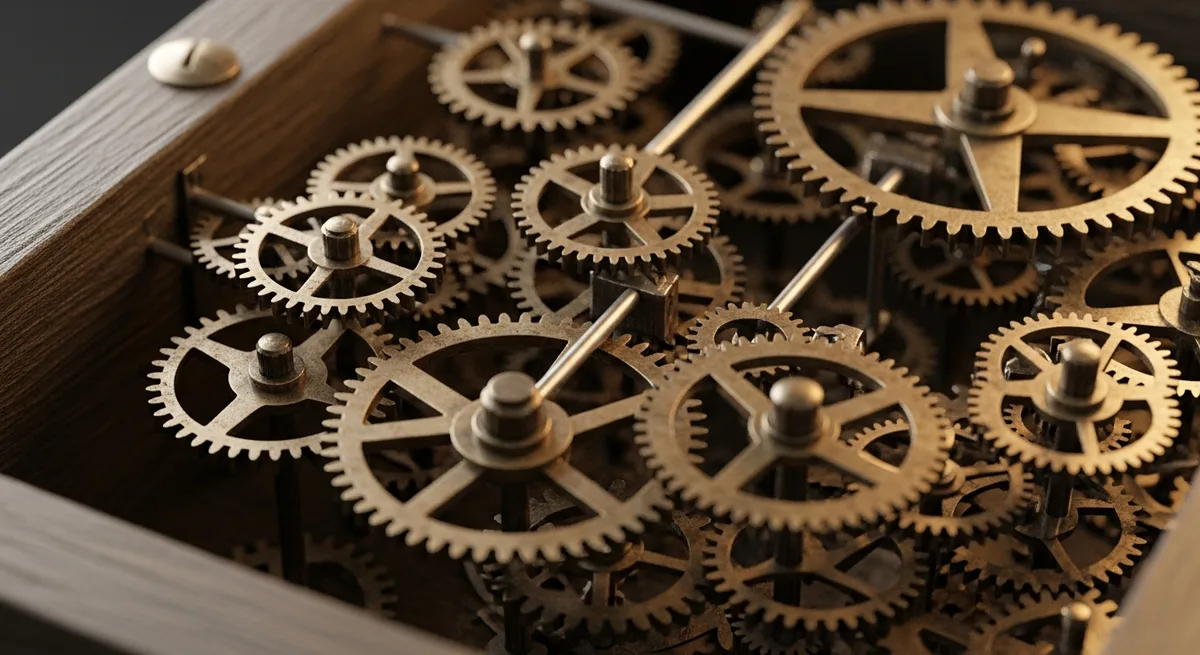
When I first touched this artifact, my fingertips registered not the chill of metal, but the petrification of time itself. This was no mere machine of the sort found in factory blueprints or the schematics of steam engines. It was something more profound—a bronze memory, exhumed from a saline Mediterranean tomb, where for millennia it had been crushed not only by the weight of the water but by the absolute silence of history. The 3.85-kilogram object felt in my palm like a dense, compressed model of the universe, constructed by an unknown hand to imprison the infinity of the firmament within a box just 33 centimeters high.
The gears of this mechanism were forged from a copper-zinc alloy with a density of 8.55 grams per cubic centimeter. This was material intended not for production, but for observation. When the master craftsman assembled this system two millennia ago, the teeth, spaced at a 2.5-millimeter pitch, were never meant for industrial load. They were designed for astronomical harmony. Each meshing of these teeth marked not the transmission of force, but the dance of celestial bodies, which the ancient Greeks observed with religious devotion. The metal sang of silence rather than the friction of movement, for every rotation was a calculation, a calibration of human existence against the cycles of the stars.
The heart of the gear train, perpetually subjected to the demands of precision, accumulated not heat, but meaning. Each tooth, measuring between 1.2 and 3.5 millimeters in width, functioned as a discrete philosophical proposition regarding the order of the cosmos. When the crank was turned, kinetic energy transmuted into mathematics. There was no room for randomness here. Every tooth, inclined at a 15-degree angle, was meticulously honed to withstand a stress of 150 megapascals—a tension generated not by mechanical pressure, but by the weight of anticipation: the waiting for an eclipse, the waiting for the convergence of planets. This was not an engineering calculation; it was an attempt to embody divine order within a bronze alloy.
The axles supporting the system, ranging from 2 to 6 millimeters in diameter, served as the spine of this metallic cosmos. They were impossibly robust, capable of sustaining torque without the slightest deviation. Their contact with the 8-millimeter bronze bearings was a silent pact between materials. Here, a coefficient of friction of merely 0.15 prevented the mechanism from seizing during its centuries of dormancy. It was an engineering discipline achieved without the aid of digital calculators, born solely of the patience and observation that would eventually become the inheritance of all Western civilization.
Twenty silent observers—the gears guarding the heart of the mechanism—were engineered to withstand a compressive force of 250 megapascals. Their alloy of 85 percent copper and 15 percent tin acted as the ramparts of a fortress protecting astronomical truth. They ensured that the solar cycle was calculated with an error margin of barely one day per century. This precision was no accident. It was the pinnacle of engineering discipline, inscribed into metal by a master who understood that his creation would outlive generations, empires, and wars.
The entire construction was encased in a boxwood housing, its density of 0.9–1.1 grams per cubic centimeter serving as a protective shield. The wood, sensitive to humidity and environmental flux, acted as skin stretched over mechanical muscle. It guarded a fragile logic against the ravages of corrosion and time. As I touched this wood, I realized it was a union of nature and human intellect, a vessel where time itself resided. It was not merely a box; it was a home for a mechanical intelligence that waited patiently to be discovered.
The operation of the mechanism mirrored the cosmic cycle, where a 1:1 ratio transmitted force through the solar dial, while a 3:2 compound gear created a harmonious vision of the whole. This was not calculation; it was the modeling of the universe. The 365.24-day solar cycle and the 29.53-day lunar cycle became natural laws etched into metal. This device allowed man to feel not merely as an observer of the universe, but as a constituent part of it, as if every incised line were a continuation of a dialogue with the stars.
Gazing at this mechanism, I saw not only the mastery of the ancient Greeks but their profound grasp of physical laws. It was a technology born of thousands of hours of observation. They understood that the strength of materials and precise geometric arrangement could create more than a tool—they had created a mechanical mind. This was true intelligence, born not of electrical impulses, but of pure logic and a bronze that withstood everything time threw against it.
This bronze mechanism remains a symbol of our engineering past. It reminds us that every complex processor or artificial intelligence has its roots in this ancient device. We are creators who look at the stars and attempt to upload them into metal. As long as this spirit remains alive, we will discover new ways to understand the universe. It was mechanical poetry inscribed in bronze, a message that still resonates across thousands of years, reminding us of our eternal desire to know, to control, and to leave a mark upon time.
When I placed my hand upon this metallic artifact, I felt how quickly the centuries had passed. These were not just pieces of metal; they were the embodiment of the human spirit. We often mistakenly believe that technological progress began with steam engines or electricity. Yet this mechanism proves that even in antiquity, humanity possessed the power to imprison the laws of the universe within bronze. It was not an industrial achievement, but a philosophical triumph, proving that the human mind has always sought more than mere survival.
Every gear, every axle, every bearing in this device testifies to the master’s patience. He was not just manufacturing an object—he was creating a universe. He measured, calculated, and calibrated until every element achieved perfection. And even now, after thousands of years, we still marvel at this precision. It is proof that we are not merely observers, but creators capable of mastering forces and transmuting them into harmony.
Today we live in a digital age where everything seems easily accessible. Yet this bronze mechanism reminds us that true value lies not in speed, but in precision and understanding. It was a device that allowed man to feel part of the universe, rather than a detached observer. And as long as we possess this artifact, we will never forget where we came from or how profound our ancestors' desire to understand the world truly was.
This was more than engineering. It was a prayer inscribed in metal. Every rotation, every cycle, every eclipse calculation was a way to commune with the divine order. We are the inheritors of this legacy. And though our tools have changed, our thirst to understand the universe remains the same. It is our eternal journey, which began somewhere in the depths of the Mediterranean and continues its path through our thoughts and our works.
Ultimately, looking at this mechanism, I understood one thing: time is not an enemy. It is the medium in which we leave our traces. This bronze artifact is the ultimate proof of that. It endured everything—humidity, pressure, wars, and oblivion. It survived because it was created with love and precision. It is a lesson to us all that everything we create must be intended not just for today, but for a future we may never see.
This mechanical poetry, inscribed in bronze, still rings loud. It reminds us that we are creators who look at the stars and attempt to upload them into metal. This is our true calling. And as long as this spirit remains alive, we will discover new ways to understand the universe and build a future that is as precise and harmonious as this ancient master’s creation. This is our legacy, our joy, and our eternal pursuit.